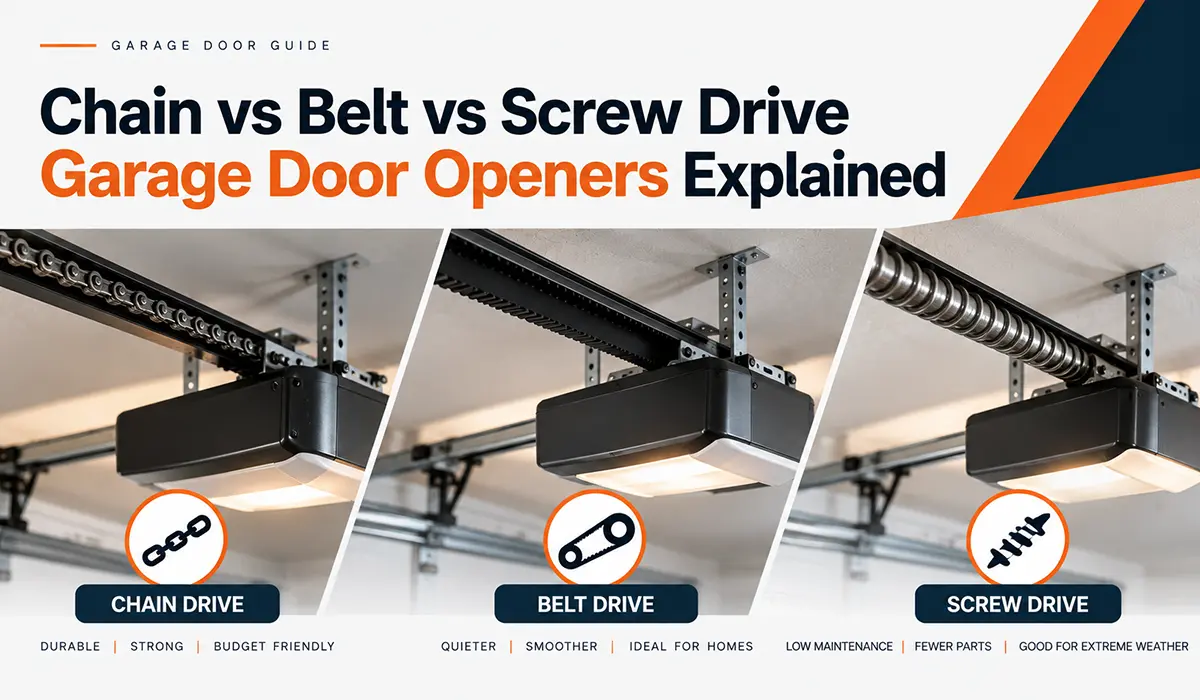

Chain drive openers are the most affordable and very durable, but they are the loudest. Belt drive openers are the quietest and run smoothly, but they cost more. Screw drive openers have fewer moving parts and sit in the middle on price and noise. For an attached Edmonton garage with a bedroom or living space nearby, a belt drive is usually the best fit. For a detached garage or a tight budget, a chain drive is a solid choice.
Shopping for a new garage door opener sounds simple until you see the options. Chain, belt, screw, wall mount. Every box claims to be quiet, strong, and smart.
The truth is that the motor and the door matter, but the part that moves your door is the drive system. It decides how loud the opener is, how much upkeep it needs, and how long it feels smooth. This guide explains each type in plain language, compares them side by side, and helps you pick the right one for your home.
Key takeaways
- The drive type is how the motor pulls the door along the rail. It mostly affects noise, cost, and upkeep.
- Chain is the lowest cost and very durable, but the loudest.
- Belt is the quietest and smoothest, and it costs the most.
- Screw has the fewest moving parts and sits in the middle.
- A heavy, insulated Edmonton door may need a stronger motor, no matter which drive you choose.
- No opener can make up for a worn spring or an unbalanced door. Fix those first.
How a garage door opener drive works
Every opener has the same basic parts: a motor unit, a rail, a trolley that slides along the rail, and an arm that connects the trolley to your door. The motor does not lift the door directly. It pulls the trolley, and the trolley guides the door up and down.
The drive system is what connects the motor to the trolley. It can be a chain, a belt, or a threaded screw. That one part changes how the opener sounds and feels.
It is worth remembering what the opener does not do. Your door springs carry most of the door weight. The opener moves a balanced door. If a spring is worn or broken, even the best opener will strain. Read our guide on why you should never replace a garage door spring yourself and learn how a broken spring can look like an opener problem.
Chain drive garage door openers
A chain drive opener uses a metal chain, much like a bicycle chain, to pull the trolley along the rail. It has been the standard design for decades.
Pros
- Lowest cost. Chain drive is usually the most affordable type to buy.
- Proven and durable. The design is simple and strong, and it handles heavy doors well.
- Easy to find and service. Parts and technicians are widely available.
Cons
- Loudest. Metal on metal makes rattling and vibration. You can often feel it in the walls.
- More upkeep. The chain needs occasional lubrication and tension checks.
- More vibration. This can be an issue in attached garages.
Best for
Detached garages, workshops, and homes where the garage is far from bedrooms. Also a good fit if you want the lowest price for a reliable unit.
Belt drive garage door openers
A belt drive opener uses a reinforced rubber belt in place of a chain. The belt is built to resist stretching, and it is much quieter than metal on metal.
Pros
- Quietest. The smooth belt cuts noise and vibration a lot.
- Smooth start and stop. The door moves with less jerking.
- Less routine upkeep. A belt generally does not need lubrication, but you should still check tension and wear.
Cons
- Higher cost. Belt drive units usually cost more than chain drive.
- Belts do wear. Over many years, a belt may need replacing, as a chain might.
Best for
Attached garages, especially with a bedroom above or beside the garage. Also a good fit for anyone who cares more about quiet than the lowest price.
Screw drive garage door openers
A screw drive opener uses a long threaded steel rod. The trolley rides along the rod as the motor turns it. There is no chain or belt to stretch.
Pros
- Fewer moving parts. That can mean fewer things to wear out.
- Fast and strong. Many screw drive units open the door quickly.
- Mid-range price. Usually between chain and belt.
Cons
- More noise than belt. It is often quieter than chain, but not as quiet as a belt.
- Needs lubrication. The screw should be lubricated as directed in the manual.
- Can be sensitive to temperature swings. In very cold weather, stiff lubricant can slow any drive. Regular maintenance matters most with this type.
Best for
Homeowners who want a mid-range unit with a simple design, and who will keep up with yearly maintenance.
Chain vs belt vs screw drive: side by side
| Chain drive | Belt drive | Screw drive | |
|---|---|---|---|
| How it moves the door | Metal chain | Reinforced rubber belt | Threaded steel rod |
| Noise | Loudest | Quietest | Medium |
| Upfront cost | Lowest | Highest | Middle |
| Routine upkeep | Lubrication and tension checks | Low, but check tension and wear | Regular lubrication |
| Smoothness | Some vibration | Very smooth | Smooth, can be a little jerky |
| Moving parts | More | Medium | Fewest |
| Best for | Detached garages, budget buyers | Attached garages, quiet homes | Mid-range buyers who keep up maintenance |
These are general comparisons. Exact noise, speed, and price depend on the brand and model. If you want a recommendation for your home, request a free quote and we will suggest the right unit.
Other types you may see
Wall mount (side mount or jackshaft) openers sit on the wall beside the door and turn the torsion shaft directly. There is no rail across the ceiling. They are a good option for garages with high ceilings, little headroom, or a ceiling you want to use for storage. They are also known for quiet operation.
Direct drive is a term some brands use for openers where the motor itself moves along a stationary chain. They run with few moving parts and are usually quiet. Availability depends on the brand.
Ask a technician whether either suits your garage. Not every door and setup works with every opener.
6 questions to help you choose
1. Is there living space next to or above the garage?
If a bedroom, nursery, or home office shares a wall or ceiling with the garage, noise matters. A belt drive or a wall mount opener is worth the extra cost. If the garage is detached, a chain drive is perfectly fine.
2. What is your budget?
Chain drive costs the least. Belt drive costs the most. Think about the cost over the life of the opener, not just the price tag. A cheaper unit that annoys you every day may not feel like a deal after a year.
3. How heavy is your door?
Many Edmonton homes have insulated steel doors, and double doors are heavy. The motor power should match the door. Most single doors work well with a standard motor, while heavy, double, or insulated doors may need a stronger one. A technician can check the weight and recommend the right power.
4. How do you use the garage?
If it is a workshop or a space where you spend time, quiet may matter more. If it is a place to park and store things, chain drive may be all you need.
5. Do you want smart features?
Many newer openers offer Wi-Fi control, smartphone alerts, and keypad access. Some models also offer a battery backup, which helps during winter power outages. Features depend on the model, not the drive type, so check what each unit includes.
6. How much maintenance will you do?
If you rarely think about the garage, choose a type with low routine upkeep and book a yearly garage door maintenance visit. We can look after the lubrication and tension checks for you.
Edmonton factors to keep in mind
- Deep cold. Any opener can run slower when lubricant thickens in minus 25 weather. Use the right cold rated products and get a tune up before winter.
- Heavy insulated doors. Insulated doors add weight. Make sure the motor power and the door balance suit each other.
- Attached garages. Many homes here have living space next to the garage. This is where quiet pays off.
- Power outages. If an outage would leave you stuck, ask about a battery backup, and learn how to open a garage door manually.
Cold and moisture are hard on all garage door parts. Our post on protecting your garage door from rust and moisture damage has more tips.
Check the door before you buy a new opener
Before you spend money on a new unit, make sure the opener is the real problem. A lot of “opener failures” turn out to be door problems, such as a worn spring, a frayed cable, or a bent track. A new opener on a bad door will struggle and may fail early.
Run through our garage door opener troubleshooting checklist first. For a wider look, see our garage door not working guide and our list of 10 signs your garage door needs immediate repair. If the door itself is worn out, read when to replace instead of repair your garage door.
Signs it is time to replace your opener
- It is more than 10 to 15 years old
- Repairs are getting more frequent
- It is very loud, shakes, or jerks the door
- The remote and wall control work only some of the time
- Parts are hard to find
- You want better security and features
Newer openers use rolling code technology, which makes them harder to copy than very old units. For more on that, read why garage door maintenance is critical for home security. If your opener is acting up but may be fixable, see how to fix a broken garage door opener.
Maintenance by drive type
Always follow the manual for your model. These are general guidelines:
- Chain drive: check the chain tension, and lubricate as the manual directs.
- Belt drive: check the belt for fraying and tension. Most need little lubrication.
- Screw drive: lubricate the screw as directed, and use a lubricant suited to cold weather.
- All types: test the safety sensors and the auto reverse monthly, replace remote batteries yearly, and keep the rail clear.
A yearly visit from a technician catches wear early. Our garage door maintenance service checks the opener, springs, cables, and safety features together.
Opener installation in Edmonton
Fix in Budget Garage Door Services installs and repairs openers for homes and businesses. We work with common brands, including LiftMaster, Chamberlain, and Genie. A proper installation includes checking the door balance, mounting the rail and motor, setting the limits and force, aligning the safety sensors, and testing the auto reverse before we leave.
Browse our garage door opener service, our garage door installation services if you want a new door with the opener, and our commercial overhead door service for businesses. You can also see examples of finished jobs on our Our Work page and learn more on the About Us page.
We serve Edmonton, St. Albert, Sherwood Park, Spruce Grove, Leduc, Beaumont, Nisku, and Fort Saskatchewan.
Frequently asked questions
Which garage door opener is the quietest?
Belt drive openers are generally the quietest because a rubber belt replaces metal on metal contact. Wall mount openers are also very quiet since the motor sits beside the door instead of overhead. Chain drive is usually the loudest.
Which type of garage door opener lasts the longest?
Lifespan depends more on the brand, door balance, and maintenance than on the drive type. Most openers last around 10 to 15 years. A balanced door, regular lubrication where needed, and a yearly tune up help any opener last longer.
Is a belt drive garage door opener worth the extra cost?
It is worth it if the garage is attached to your living space, or you want smooth, quiet operation. If the garage is detached or you rarely notice the noise, a chain drive gives you good value and the same lifting power.
Do screw drive openers need maintenance?
Yes. The threaded rod should be lubricated as the manual directs, and the opener should be checked yearly. Cold weather can thicken lubricant, so a fall tune up is a good idea for Edmonton homes.
Can I switch from a chain drive to a belt drive on my current opener?
Usually you replace the whole opener. Some brands offer conversion parts for specific models, but it is not common. A technician can tell you whether your model has an option, or whether a new unit is the better value.
What is the best garage door opener for a garage under a bedroom?
A belt drive or a wall mount opener is usually the best choice. Both run quietly, and a wall mount also keeps the motor off the ceiling. Make sure the door is well balanced, since a strained opener is louder.
What horsepower do I need for my garage door opener?
Most standard single doors work with a standard residential motor. Heavy, double, or insulated doors may need a stronger one. A technician can check the door weight and balance and suggest the right power. See our garage door opener service for help.
Get the right opener for your home
Chain, belt, and screw drive openers all work well when they are sized and installed correctly. The best choice depends on your garage layout, your door, and your budget.
Fix in Budget Garage Door Services offers free quotes, same day service, and a Fixed Right or It’s Free guarantee across Edmonton and nearby cities.
Not sure which one to pick? Call 780-908-0907, request a free quote, or book an appointment online. You can also browse more tips on our garage door blog.
