
A garage door talks to you through the noises it makes, and learning to read them helps you catch a small problem before it becomes a big one. Some sounds are harmless and just want a little lubrication. Others, a single loud bang in particular, are a warning that a part under tension has failed. This guide matches the common sounds to their likely causes so you know whether to grab the lubricant or reach for the phone.
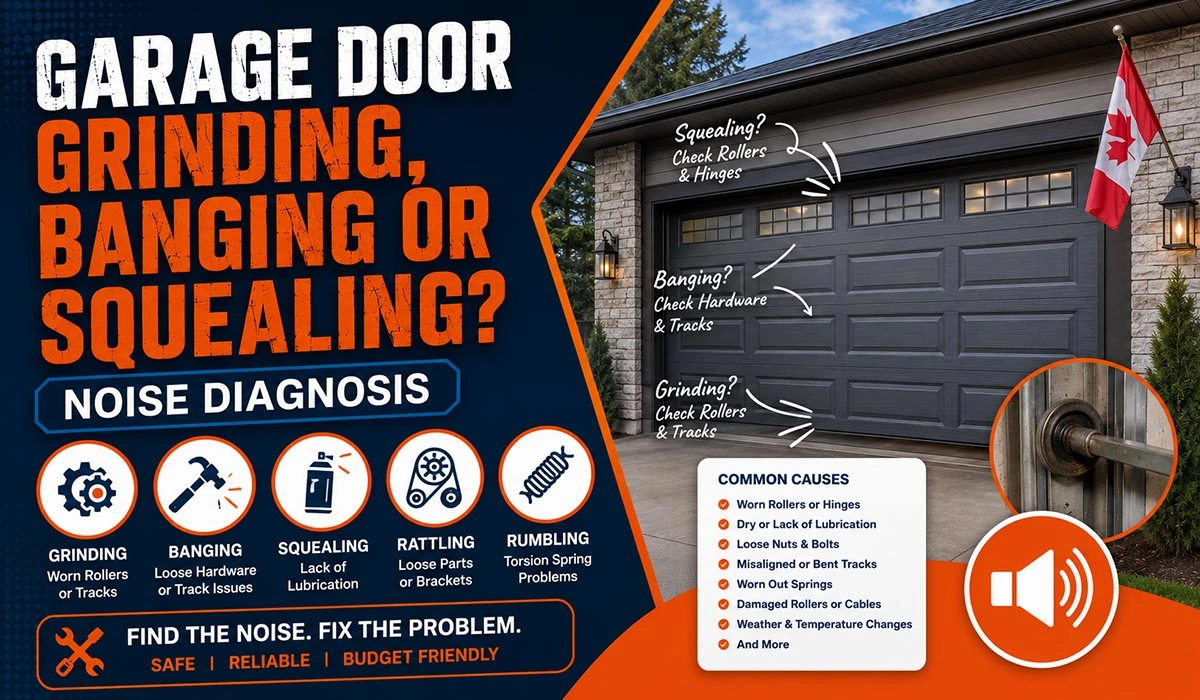
A garage door’s noise usually points to a specific cause: a single loud bang means a broken spring, grinding often means worn rollers or a hardware problem, squealing usually means dry rollers and hinges that need lubrication, and rattling means loose hardware. Squeaks and rattles are often a home fix. A loud bang or grinding should be checked, and a suspected broken spring should never be forced.
Match the sound to the cause
| Sound | Likely cause | What to do |
| One loud bang, then heavy door | Broken spring | Stop. Do not force it. Call. |
| Grinding or scraping | Worn rollers, hardware, or opener | Inspect, likely needs a technician |
| Squealing or squeaking | Dry rollers and hinges | Lubricate; replace if it persists |
| Rattling or vibrating | Loose nuts, bolts and brackets | Tighten hardware |
| Popping or clunking | Hinges, or a section binding | Inspect hinges and track |
| Straining or humming opener | Opener working too hard | Check balance, may need service |
The sounds you can usually fix yourself
Squealing and squeaking
This is the most common complaint and usually the least serious. Dry rollers, hinges and springs squeal as they move. A proper garage door lubricant on the rollers, hinges and springs often silences it in minutes. Do not use a general spray oil, which attracts dust and gums up; use a product made for garage doors. Our maintenance guide covers how and where to lubricate. If the squeal comes straight back after lubricating, the rollers are worn out and need replacing.
Rattling and vibrating
Thousands of open-and-close cycles slowly shake the hardware loose. A door that rattles usually just needs its nuts, bolts and brackets tightened with a socket set. This is a safe, satisfying job for most homeowners, as long as you do not touch anything spring-related.
The sounds that mean stop and call
A single loud bang is the one to respect
If you heard one sharp, loud bang, like a firecracker or something heavy dropping, and the door then became hard to open, a spring has almost certainly broken. Do not try to lift the door by hand and do not run the opener against it. A door with a broken spring is far too heavy to handle safely. Call.
Grinding and scraping
A grinding or scraping sound means metal is rubbing where it should not, usually worn rollers, a hardware problem, or an opener straining. Left alone, grinding rollers can let the door slip off its track. If the noise is grinding rather than a simple squeak, it is worth a look from a technician.
Popping or clunking
A popping or clunking as the door moves often points to hinges that are worn or a panel section binding as it travels the curve in the track. If the door also looks like it moves unevenly, the opening uneven or crooked guide is the next read.
Why a noisy door is worth sorting early
Noise is the cheapest warning you will ever get. A squeal that becomes a grind, then a bind, then an off-track door is a common path, and each step up that ladder costs more to fix. Dealing with the sound while it is still just a sound, either with a bit of lubricant or a quick roller replacement, is almost always cheaper than waiting for the part to fail outright and take others down with it.
Frequently asked questions
Is a noisy door dangerous?
Most noises are early warnings rather than immediate dangers, but a single loud bang is different because it signals a failed spring, and that is dangerous to handle. When in doubt about a sudden loud noise, leave the door and call.
What lubricant should I use?
A lubricant made specifically for garage doors, applied to rollers, hinges and springs. Avoid general-purpose spray oil, which collects grit and makes things worse over time.
I lubricated it and the noise came back fast. Why?
Lubrication masks wear but does not cure it. If the sound returns quickly, the part, usually a roller, is worn out and needs replacing rather than oiling.
Hearing something you don’t like? Call +1 780-908-0907 for a quick Edmonton diagnosis before it gets worse.
